
“The same defensive posture that protects against a prolonged conflict could be exactly the wrong call if peace arrives faster than expected. The question for every client is not just what to do – but what they are prepared to accept in each outcome.”
THE CONTEXT: WHAT IS ACTUALLY HAPPENING
US-Israeli strikes on Iran began on 28 February, turning what had been a regional military confrontation into a global market shock almost overnight. Energy, shipping, insurance, aviation, and financial risk were all repriced in a matter of days.
THE STRAIT OF HORMUZ – THE WORLD’S MOST CRITICAL OIL CHOKEPOINT
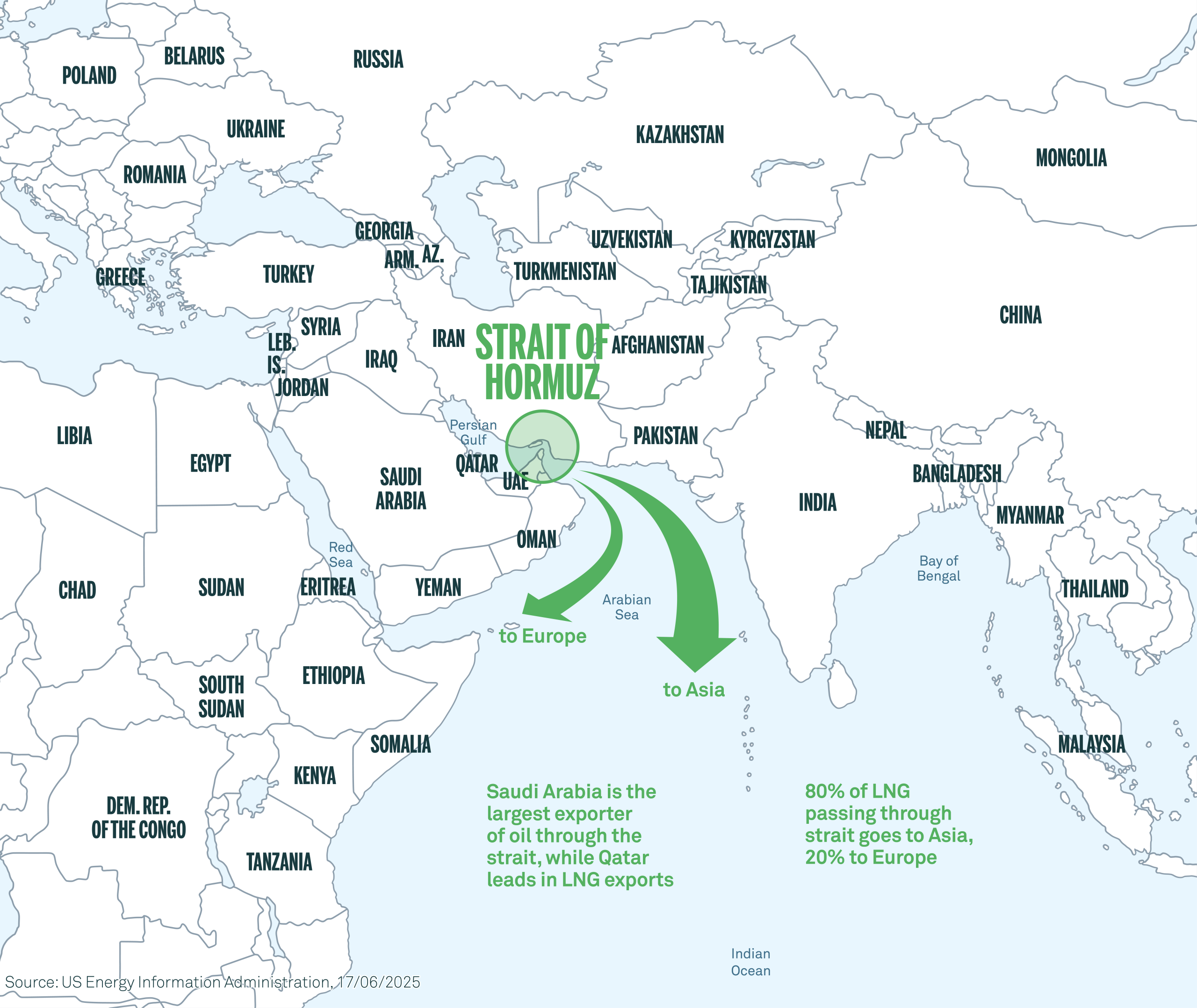
Roughly one-fifth of global oil supply transits here each day. Commercial traffic has been severely disrupted since late February.
Iran maintains a stranglehold on the Strait of Hormuz – the narrow waterway through which roughly a fifth of the world’s oil transits during peacetime. As long as that remains the status quo, analysts expect oil and stock markets to experience continued heightened volatility.
STRAIT OF HORMUZ – CONNECTS OIL & LNG PRODUCTION IN THE MIDDLE EAST TO GLOBAL MARKETS VIA ARABIAN SEA & THE INDIAN OCEAN
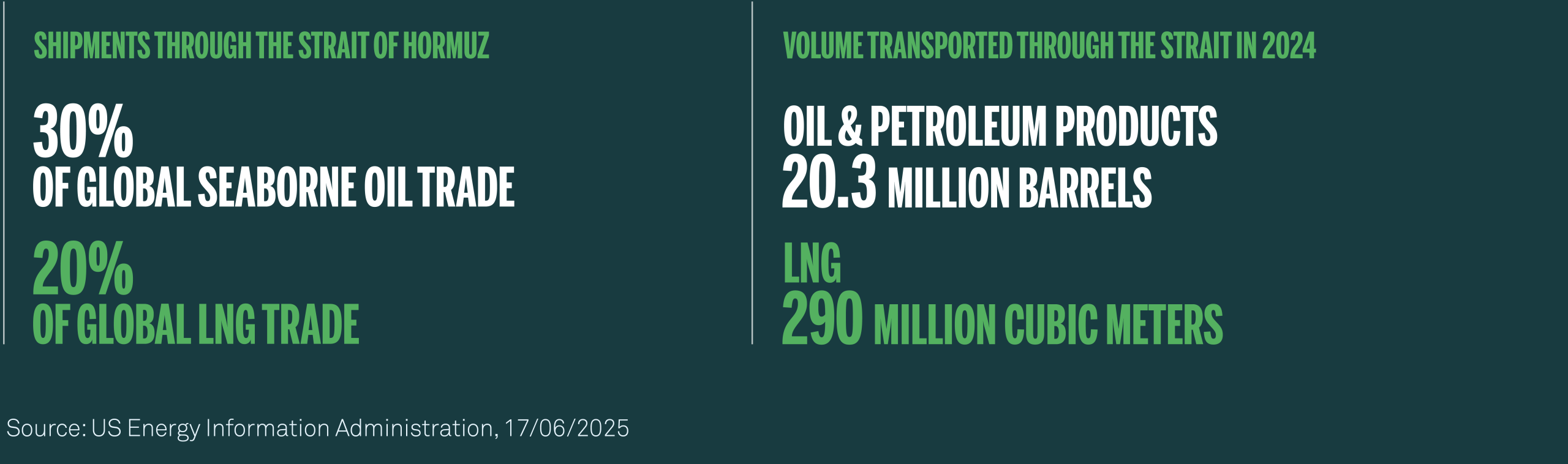
OIL & LNG SHIPMENTS THROUGH THE STRAIT
WHY THIS IS SO HARD TO NAVIGATE
The central dilemma facing any adviser right now is that the two most plausible outcomes lead to radically different portfolio decisions.
If the conflict is prolonged: energy stays elevated, inflation persists, recession risk grows, and defensive positioning looks correct. If peace arrives quickly: markets rebound sharply, defensive positions drag on returns, and growth assets recover strongly. The same portfolio can be right or wrong depending entirely on timing.
This is not a normal risk environment where diversification smooths outcomes. This is a genuine binary fork in the road – and no one knows with confidence which path we are on.
HOW MUCH THE WORLD RELIES ON THIS REGION
The scale of global dependency on Strait of Hormuz flows is often underappreciated. The disruption is not just about the oil price headline – it ripples through an interconnected web of commodities and supply chains.
The EU consumnes about 10.5 million barrels of oil per day, and the IEA emergency reserves being released are runnign at around 2.5 million barrels per day – giving approximately 160 days before that buffer is exhausted.
EU storage currently holds around 270 million barrels of crude – roughly enough for just three weeks of consumption once refined into usuable products like diesel, gasoline and jet fuel.
The gas picture us arguably more alarming. EU gas storage entered 2026 at only 61% capacity, compared with 72% the previous year – and the EU imports 80% of its gas.
IMPACTS
GLOBAL ENERGY MARKETS – BRENT CRUDE SURGES PAST $100/BARREL
Oil prices have risen more than 40% since the outbreak of conflict, their highest level since 2022.
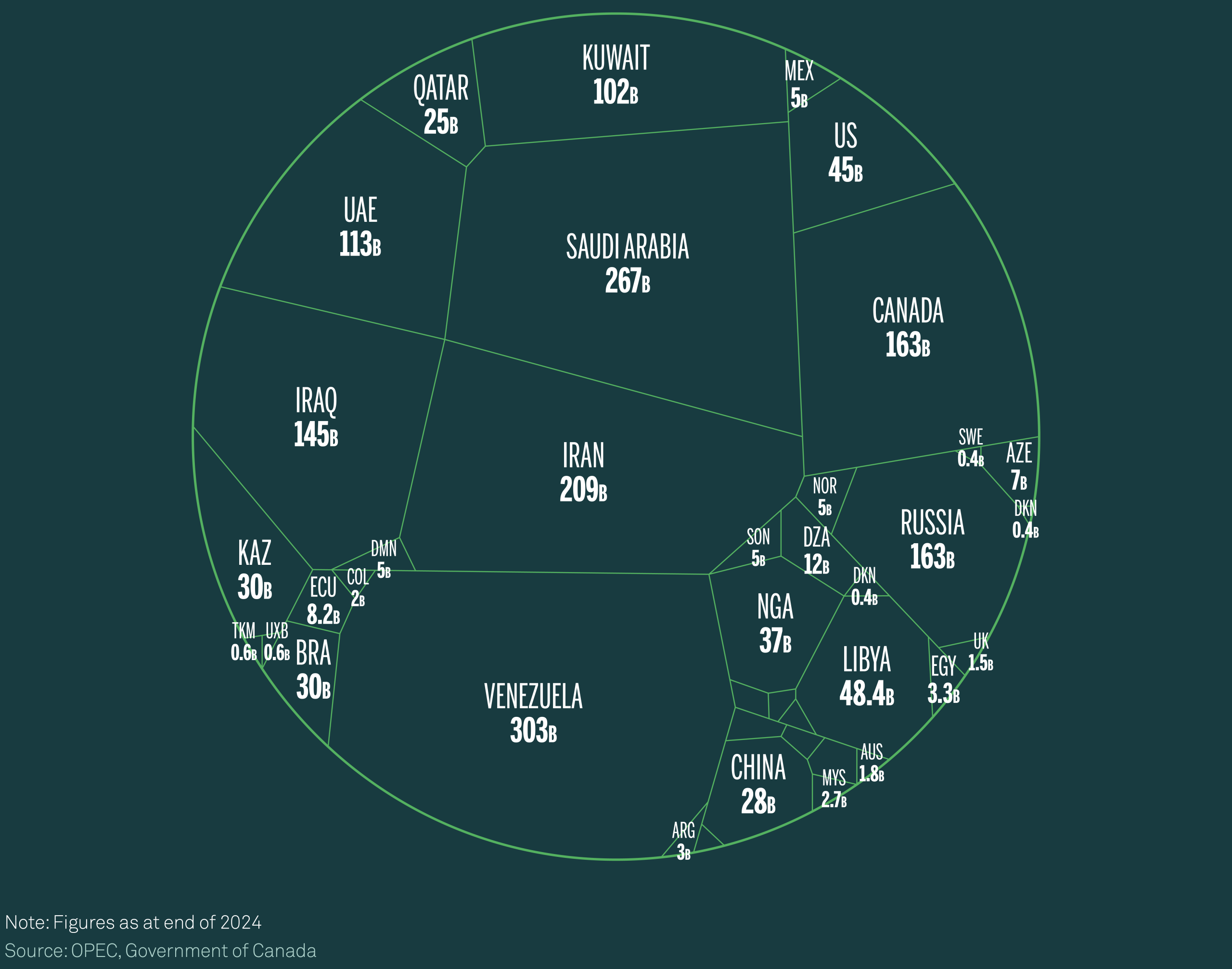
OIL PRODUCTION PER YEAR – PER BILLION BALANCE
KEY DEPENDENCY STATISTICS:
- Roughly 20 million barrels per day of crude oil and petroleum products moved through the Strait in 2025 – equal to approximately one-fifth of global consumption
- Japan relies on the Middle East for approximately 90% of its crude oil imports, most routed via Hormuz
- South Korea sources around 70% of its crude from the region; 84% of crude and 83% of LNG passing through the Strait in 2024 was bound for Asia
- Gulf countries account for roughly 45% of global sulfur supply – disruption is already projected to spike fertiliser costs and affect copper and chemicals industries
- Qatar, which supplies 20% of the world’s LNG, suspended production temporarily following an Iranian drone attack in early March
INDUSTRIES MOST IMPACTED
Global Market Volatility – Dramatic Intraday Swings Become Routine
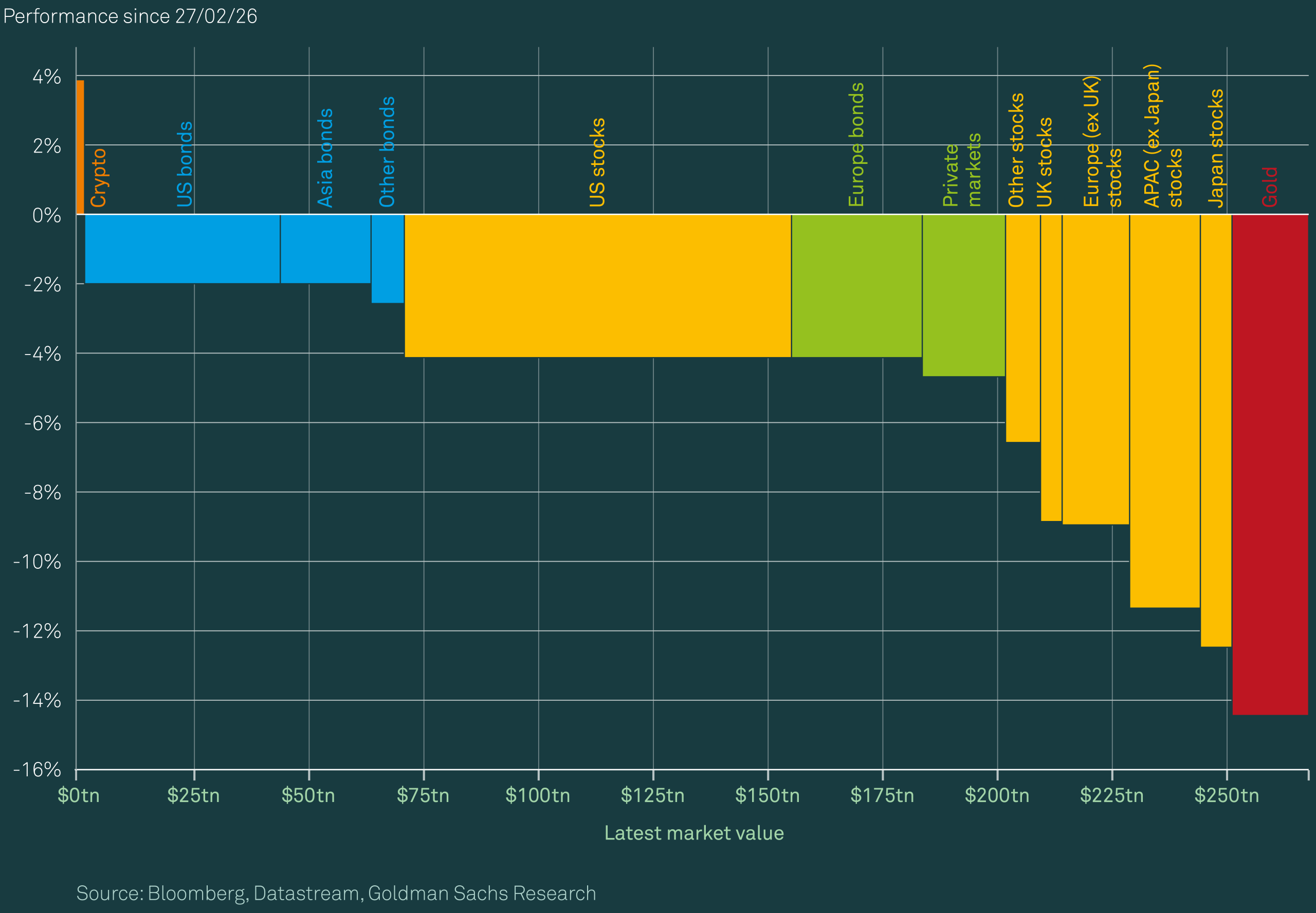
The S&P 500 has fallen below its 200-day moving average. Energy (+33% YTD) is the only positive sector.
The market divergence since the conflict began has been stark. Energy is the only positive sector in the S&P 500 year-to-date, up around 33%, while technology is down 7% and financials down 10%. The split between energy exporters and importers is equally pronounced at a country level – Norway, Brazil, and Peru are outperforming; India and Germany are struggling.
WORLD PORTFOLIO PERFORMANCE SINXCE START OF MIDDLE EAST WAR
DIRECTLY EXPOSED SECTORS
Energy producers – beneficiaries in the near term as oil above $100 boosts revenues significantly
Airlines & aviation – Gulf air corridors disrupted, jet fuel costs surging, Middle East routes suspended
Shipping & logistics – freight costs and insurance surcharges rising sharply, adding a de facto global surcharge to traded goods
Agriculture – fertiliser costs spiking due to sulfur supply disruption from Gulf producers
Energy-intensive manufacturing – steel, chemicals, and electronics facing margin pressure from higher input costs

INDIRECTLY EXPOSED SECTORS
Consumer discretionary – purchasing power squeezed as households spend more on fuel and energy
Technology – not immune to broader slowdown in business confidence and capital expenditure
Financial services – central banks are caught between cutting rates to support growth and keeping them high to fight inflation; 10-year Treasury yields have spiked to nearly 4.5%
Emerging markets – particularly those in Asia with heavy energy import dependency and limited fiscal buffers
IEA warning – April 2026
“The biggest problem today is the lack of jet fuel and diesel. We are seeing it already in Asia, but soon – in April, or beginning of May – it will come to Europe.” Fatih Birol, IEA Executive Director, 1st April 2026
IEA warning – April 2026
Source: Euronews / Kpler, IEA Oil Market Report March 2026, CNBC / IEA, ainvest.com. EU gas storage figure: start of 2026.
TWO SCENARIOS — TWO VERY DIFFERENT PORTFOLIOS
Analysts and economists are broadly working within two planning scenarios. The outcomes – and the portfolio implications of each – diverge significantly.
SCENARIO 1: PROLONGED CONFLICT
Oil rises to $130-$150/barrel, Eurozone likely contracts in Q2, Chinese growth could fall below 3%, Inflation becomes entrenched, Central banks unable to cut rates, Recession risk rises materially.
Portfolio for this scenario
OVERWEIGHT: Energy, commodities, gold, CHF, JPY
UNDERWEIGHT: Consumer, airlines, EM Asia, tech
SCENARIO 2: SWIFT RESOLUTION
GDP impact outside Gulf is limited, Markets rebound sharply, Dollar weakness resumes, Central banks can resume rate cuts, Inflation spike proves temporary, Growth assets recover strongly.
Portfolio for this scenario
OVERWEIGHT: International equities, Emerging Markets, consumer, tech
UNDERWEIGHT: Defensive commodities, safe havens
THE HONEST CONCLUSION: WHAT DO WE DO?
PORTFOLIO STRATEGY UNDER UNCERTAINTY
A tiered or split approach may be the most intellectually honest response to a genuine binary outcome scenario.
Moving defensively right now is rational hedging – but it comes with a real opportunity cost if the situation resolves faster than feared. History shows that markets can rebound sharply and quickly once a geopolitical event reaches a clear turning point, leaving cautious portfolios behind.
The right framing for clients is not simply ‘what should we do?’ It is: ‘what outcomes are we prepared to accept in each scenario, and how much risk are we comfortable carrying in either direction?’
A tiered approach – maintaining meaningful defensive positioning while preserving some exposure to a recovery scenario – may be the most intellectually honest answer available right now. It will not maximise returns in either scenario, but it avoids catastrophic underperformance in either direction.
WHAT OUR MANAGERS ARE WATCHING
- Duration of Strait of Hormuz disruption – the single most important variable for energy markets and the wider economic outlook
- Peace negotiation progress – current US and Iranian positions remain far apart, with significant gaps in key demands
- Inflation data in the UK, EU and US – will determine how much flexibility central banks have to respond
- Corporate earnings guidance – signals whether businesses are beginning to materially adjust to higher energy costs
- Safe-haven flows – movement in gold, yen, and Swiss franc as indicators of broader market sentiment direction
Important Information
This document has been prepared for information and discussion purposes only and does not constitute investment advice or a personal recommendation. The scenarios and market commentary presented reflect current analysis and are subject to rapid change given the evolving geopolitical environment. Past performance is not a reliable indicator of future results. Investors should seek independent financial advice before making any investment decisions.
Please contact NBL if you need to speak to us.